LA Unified plan saves preschool slots with new transitional kindergarten
 Sarah Tully, EdSource
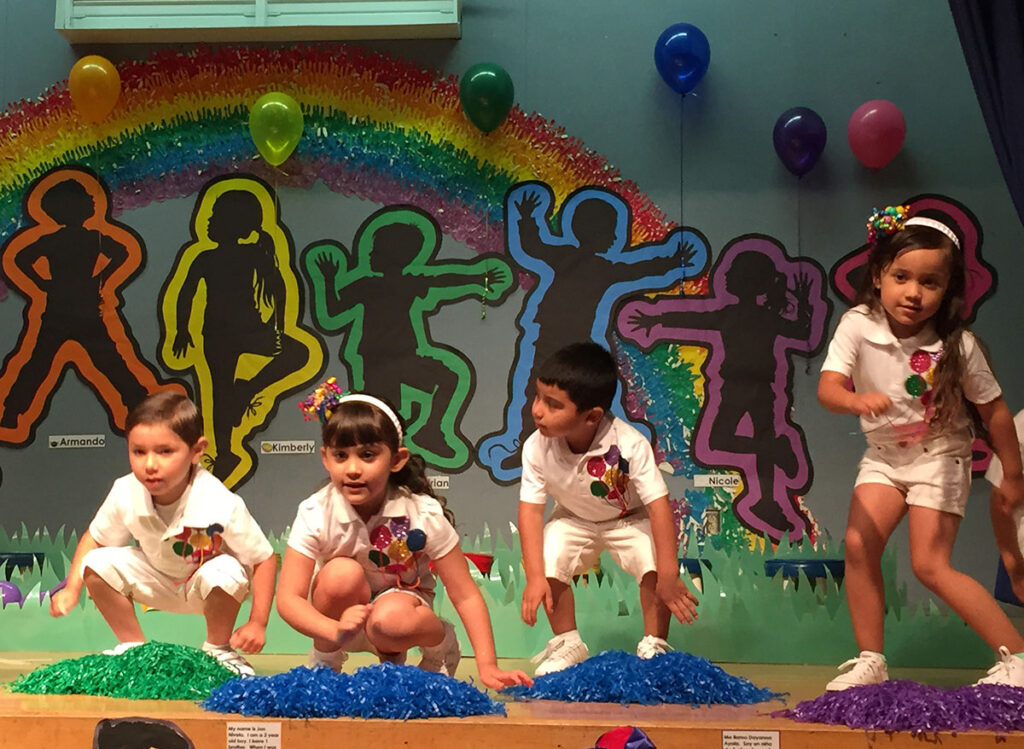
Children perform at an end-of-the-twelvemonth ceremony for Los Angeles Unified's preschool program.
 Sarah Tully, EdSource
Children perform at an end-of-the-year ceremony for Los Angeles Unified'south preschool program.
The state's largest school district plans to offer full-mean solar day classes and save thousands of school spaces for more depression-income 4-year-olds in new transitional kindergarten classes, which will eventually replace a popular preschool program slated for elimination.
The Los Angeles Unified Schoolhouse Commune is ready Tuesday to approve a budget that includes $14.three 1000000 to expand its transitional kindergarten with new classes designed for children who turn 5 after Dec. ii. The electric current transitional kindergarten program is geared for children who turn five betwixt Sept. 2 and Dec. 2.
Under Los Angeles Unified's program, about 2,800 additional transitional kindergarten spaces would be bachelor for iv-year-olds in 117 schools in the fall. In 2016-17, the remaining 173 preschool sites would convert to transitional kindergartens.
Already, the district enrolls almost ten,200 children in its current transitional kindergarten classes.
With the new plan, Los Angeles Unified would stage out 1 of its preschool programs, the School Readiness Linguistic communication Development Plan, which enrolls thirteen,968 children who are three and 4 years old.
When the expanded transitional kindergarten programme is fully in place, Superintendent Ramon Cortines said information technology would serve the aforementioned number of iv-year-olds as the current preschool program and that no teacher positions would exist cut. Low-income iii-year-olds could enroll in country-funded preschool.
"Considering I think early on ed is so of import, the status quo (current preschool program) is not practiced enough," Cortines told the Early Childhood Education and Parent Engagement Committee last week.
With the expanded plan, the transitional kindergarten mean solar day would last six hours, much longer than the 2 ½-hour sessions in preschool. The adult to kid ratio would be 1-to-12, compared to 1-to-viii in preschool. For regular transitional kindergarten, the ratio is 24-to-1, although some schools rent aides to reduce that ratio.
In 2010, legislators changed the required v-year birthdate to brainstorm kindergarten from Dec. 2 to Sept. ane. Transitional kindergarten was created to adjust those four- twelvemonth-olds with fall birthdays who were previously eligible to enroll in kindergarten. While those children would all the same be able to enroll, Los Angeles Unified's new classes would admit depression-income children who turn v after December. ii. Priority would be given past birthdate, with the oldest children admitted first.
Cortines said the commune needs to use its money wisely and is focusing on low-income children, who are served in the preschool program.
State lawmakers are because a modify in law, prompted past Los Angeles Unified lobbyists, allowing school districts to enroll these younger 4-year-olds in transitional kindergarten programs. The proposal is function of a "trailer bill," which is attached to the state budget.
Los Angeles Unified, which has 646,000 students, would phase in the transitional kindergarten expansion over two years. For the offset year, the commune is combining some of the current preschool locations into 117 sites and turning them into transitional kindergarten.
Some of the preschool teachers accept concerns about the transitional kindergarten plan, maxim the school day is too long for young children and lacks nap fourth dimension, said Silvia Leon, a longtime preschool teacher who has led protests against the preschool cuts. Likewise, teachers worry the district is rushing the change by starting classes in just a few months.
Instead, the district should launch pilot programs at 8 schools next schoolhouse year and keep the preschools intact during that time, Leon said. Virtually 75 teachers sent in messages and about 10 spoke at a budget hearing this week, she said.
Maureen Diekmann, executive director of the district's early babyhood pedagogy division, said teachers already vary activities depending on young children'south rest needs, often providing quiet music, stories and play later lunch. Some children at that age are no longer interested in naps, she said.
"It's not something nosotros're non used to dealing with," Diekmann said.
Kim Pattillo Brownson, director of educational equity for the Advocacy Project, who has been fighting to relieve the preschool program, said she was excited about the transitional kindergarten expansion because information technology gives extra hours in school – something that especially benefits children from low-income families.
"Having more than fourth dimension with experienced educators pays off," said Pattillo Brownson, an external representative on the district's Early Childhood Didactics and Parent Date Ad Hoc Commission.
However, she said the new plan should exist designed for younger ages so it's a place for "exploration and joy" and not newspaper-and-pencil work.
"Information technology is a very fast timeline and the stakes are loftier for getting it right," Pattillo Brownson said. "I'm very impressed by the level of commitment and resources that the superintendent has put into this."
For the younger 4-twelvemonth-olds, the transitional kindergarten expansion classes would be based on preschool curriculum and standards – non the kindergarten Common Cadre standards used for older children, according to a memo from the superintendent to the Los Angeles Unified lath.
Likewise, the new programme would include opportunities for play, including two hours per day in an "outdoor learning environs," according to the memo.
The preschool teachers' letter of the alphabet said some schools lack appropriate outdoor places because they take asphalt surfaces and metal monkey confined. Plus, the younger children will take to compete with kindergartners to apply their shared playgrounds.
Merely Diekmann said teachers would schedule the outdoor fourth dimension throughout the day and so at that place would exist room for all the students. As well, she said some schools would demand to prepare their outdoor areas. "It is truthful that we demand to ramp up in this expanse because nosotros are not already equipped with cloth that nosotros need," she said.
Every bit office of the district funding, each school is slated to receive nearly $5,000 for transitional kindergarten materials and curriculum, co-ordinate to the Los Angeles Unified memo.
Earlier this year, the preschool plan was threatened with budget cuts because Los Angeles Unified said it could no longer afford to pay for information technology from the general fund, about $16 meg a year.
The expansion will allow the district to tap into country funds: The state gives districts money after a child turns v based on boilerplate daily attendance, but like any other student. With the change in country police force assuasive younger children in transitional kindergarten, Los Angeles Unified volition cover the costs for children before they plow 5.
Commune officials had no estimate of how much they would receive from the state. The amount will depend on the students' fiveth birthdates and when the district can get-go collecting country money for them.
At the committee coming together, three lath members – Monica Ratliff, Steve Zimmer and Bennett Kayser – said they supported Cortines' program.
"We knew the goal was to get to the right solution," Zimmer said.
With this plan, Los Angeles Unified is attempting to carry out what state lawmakers have tried to do statewide. Last year, legislators unsuccessfully pushed a pecker that promised pre-kindergarten to all iv-year-olds. Currently, the Legislature is considering a pecker, AB 47, that would guarantee a year of state preschool or transitional kindergarten for low-income four-year-olds. The bill passed the Associates and is in Senate deliberations.
To get more reports like this one, click here to sign up for EdSource'southward no-cost daily email on latest developments in education.
Source: https://edsource.org/2015/la-unified-plan-saves-preschool-slots-with-new-transitional-kindergarten/81750
0 Response to "LA Unified plan saves preschool slots with new transitional kindergarten"
Enviar um comentário